The location of the Raion Taiko Blog has changed. Please visit our new home to read our latest entry, featuring thoughts and reflections from Kodo's Yoshikazu and Yoko Fujimoto during the 2009 KASA Workshop Tour.
Raion Taiko Blog - Earth Celebration Part 3
Please remember to update your bookmarks.
Showing posts with label Earth Celebration. Show all posts
Showing posts with label Earth Celebration. Show all posts
2009-09-26
Earth Celebration - Part 3 KASA Tour and N. Ameican Taiko


2009-09-12
Earth Celebration - Part 2
Updates on my location and the status, plus the second installment of my experiences at Kodo's 2009 Earth Celebration.
Earth Celebration - Part 2 - The Shiroyama Concert
Did you miss part 1 of Earth Celebration? No worries
Earth Celebration - Part 1
And be sure to check out pictures from Raion Taiko's debut in Japan:
Raion Taiko Pictures
2009-08-20
Kodo Earth Celebration - Part 1
Visit our new blog at our new website, www.michigantaiko.com to read the latest entry covering our trip to Sado Island for Kodo's annual Earth Celebration. 
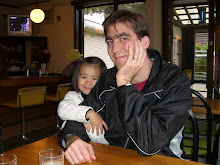
In part 1 I talk about Kodo's Sado Island Taiko Center and the workshop I took with my daughter, "Shin-chan Sensei's Taiko Experience". We both really enjoyed ourselves.
Kodo Earth Celebration - Part 1
2007-08-29
Earth Celebration - Kodo Concert
The Concert
In the evening on all three days of the Earth Celebration, Kodo presents a concert along with some of their international guest artists. Kodo headlines all three performances, but the guests artists change each day. This was actually my first time attending the Earth Celebration, but from what I have understood, that is how they have done it for 20 years now.
We were able to attend the first night’s (Friday) performance. The guest performers were the Miyake Taiko Honkzai (about whom I will make a separate entry), so this concert happened to be pure taiko, … The encore, however, involved some international guests. The concert began at 6:30 and must have lasted nearly 3 hours, by the time we they finished.
When we arrived on Sado we were not actually sure if we would be able to attend the concert. We did not have tickets before we left, because the pre-sale tickets were sold out. Uncertain whether there were any same day tickets left, we were forced to wait until we arrived on the island to purchase them. Luckily we were able to still get tickets when we arrived.
It is a bit different, the way they organize the seating. All the tickets are the same price, except that if you are able to purchase a pre-sale ticket, there is a slight discount. Once you have your ticket, you must go to Kisaki Shrine (it is where the entrance to the concert venue is) to receive a color coded seating ticket. Depending on the color you receive, you are given a time and a place to line up for the concert. There are no reserved seats for the concert, so the earlier you can arrive at Kisaki Shrine, the better seating you are likely to have.
Towards the top of the hill, some of the concert goers began to rush a bit towards the seating area, in the hopes of getting better seating, I suppose. We chose not to rush and were pleased that we could still secure dry seating, where the view was quite good.
By about 6:15 or so, the park was full. Off to our left, we heard some applause and cheering. I looked and saw several people wearing the traditional Kodo Happi (a style of festival coat). I then looked to my right and noticed a man in a mask, carrying an Okedo taiko making his way towards the audience. His mask covered the upper half of his face and that, combined with his clothing style, reminded me of a character out of Grimm’s fairy tales. Soon, an announcement was made, explaining that these Kodo members were collecting donations for the benefit of victims of the Niigata Earthquake, which occurred in July, I believe. The highlight of this was when the man in the mask finally set up the drum he was carrying and played a short piece. The nice part was that it was not part of the concert (officially) so we were able to take video of it.
As the concert was getting ready to start, there was the pre-concert announcement, asking people to turn off their cell phones, refrain from using cameras and recording devices and other general guidelines and instructions. I was rather surprised to hear them advise guests who wished to stand or dance to use the open areas on either side of the seating area. Dancing at a taiko concert? I couldn’t imagine that. Granted that taiko are drums, and most of the time, drums help to provide a beat or rhythms to dance to, but taiko drum rhythms are often mixed meter (if there even is a meter) and I don’t think I’ve ever heard a piece that lent itself to dancing, or made me want to stand up and shake my bootie (booty? No, that’s for pirates. Perhaps bootay? anyhow…). That’s not to say that I haven’t been moved by taiko performances. As I mentioned in earlier posts, several performances have nearly brought me to tears. Perhaps the pre-concert script was set and was not changed from night to night. After all, the other concerts involved music styles other than taiko, like Latin music, and that certainly will make quite a few people want to dance, you almost can’t help it.
To my surprise, before too many songs had been performed, there were audience members up on the sides of the seating area dancing around. I guess some people just need to dance when they hear any type of music. My son would actually be one of those people, he is only 1, but if he hears music, he swaying back and forth, squatting and standing, leaning back and forth, all to the beat of the music. It’s quite amusing.
Back to the Earth Celebration… The last time I saw Kodo in concert was 7 or 8 years ago I think. I remember the program for that concert was very traditional and rather serious. This time, the concert seemed to have more variety. The traditional and serious pieces were still there, but there were a few “newer” (newer, at least to me) songs which seemed to be more in the modern taiko styles. It was a nice mixture. They ended with their standby crowd favorites: the Odaiko solo, followed by Yataibayashi.
The Odaiko solo is played on a large drum (about 1 meter or more across), which is wheeled onto the stage on a cart surrounded by lanterns. The drum is situated so that the head is facing the audience, and the soloist’s back, therefore is facing the audience. There are actually two people playing the drum, but one is playing the back side and is hardly visible to the audience. This part is more of an accompaniment anyhow.
Yataibayashi is one of Kodo’s most well known pieces, perhaps because of the position in which it is played. The drums are horizontal and placed low to the ground, slightly angled. The performer must play in a position sitting down, yet leaning back like he is midway through a sit-up. Needless to say, it is very physically demanding. These two pieces seem to always be played wearing Kodo’s other signature outfit, the fundoshi. It seems almost disrespectful to describe it as being like a diaper, so if you are unfamiliar with the term, ‘fundoshi’ do a google image search on it and you will get the idea. It seems that only certain members, who have attained a high level of skill, are permitted to perform wearing this “clothing”.
The encore was quite unexpected. By that, I do not mean that I was not expecting an encore, but rather the content of the encore was surprising. By the time it was finished, had lasted more than 30 minutes. I was expecting more taiko for the encore, but the first half did not even feature a taiko drummer, nor a member of Kodo. The first encore performer was Tamango, a West African tap dancer, who lives in
http://www.urbantap.net/index.html
http://www.drummerworld.com/drummers/Giovanni_Hidalgo.html
They performed for 15 or 20 minutes together. It actually took me a few minutes to figure out what was actually going on. Although the two performers were very talented and fun to watch, I thought that an encore should be more of the same type of performing that was in the concert. After all, isn’t that what prompted the audience’s response? I finally realized that they would be performers in the following night’s concert and they were just doing a little promotion for the next day’s show. Either way, I did enjoy their performances, and they were eventually joined by members of Kodo. The performing group grew as the members of Kodo joined Tamango and
After close to 40 minutes of encore, the concert finally ended and I would guess that the audience went home very satisfied (except for the one fellow who was removed for disorderly conduct).
2007-07-14
My first experience ...
Our departure date is now only a little more than a week away. As we get busier with our moving preparations, we are getting more and more excited about studying taiko drumming. I think I first saw a live taiko performance in 1998, when I first moved to Japan. It was incredible. It was evident that the passion with which the drummers played, moved everyone in the crowd who was watching. The name of the group was Honno Taiko of Ishikawa ken. The group is made up of three women. They were accompanied by several other drums for this performance at some sort of street festival in Kanazawa. Between songs, one of the women jumping around yelling at the audience (in a friendly way). I was actually surprised at her energy, because it seemed that everyone in the group had used up there energy (and then some) during the performance, yet this woman seemed to have an endless supply. Anyone who is familiar with Honno Taiko has probably already realized that I am speaking of Jige-san, who is still a member of the group, and still seems to have no limits to her energy. Anyway, at this point, I had only been in Japan for about two weeks and had a very limited understanding of Japanese. From what I was able to understand, it seemed that Jige-san was inviting us to a larger event later on that month, where Honno Taiko would be headlining. This was most likely Ecstasia, an annual event put on my Asano Taiko in Matto, near Kanazawa. I didn't attend that year, but I did the following year and was, again, speechless with awe at the way these drums were played, and seemed to have the same effect on everyone in attendance.
I also was able to see Kodo perform twice when I lived in Japan from 1998 - 2000. What left the biggest impression on me from their performance were the songs, "O-daiko" and "Yataibayashi", which were performed one right after another. Both of these pieces require an extraordinary level of physical endurance, which was very obvious during the performance. By the time they were at the end of the song, I felt like the drummer's heart was ready to burst. Literally burst, and yet, I also felt that if that were to happen, he would die with a smile on his face. I recently read Jack London's "Call of the Wild". At one point in the story, London writes about certain sled dogs' desires to die in the traces of the sled. The dogs felt shame at being cut out of the traces, even if continuing meant certain death. I felt as if these drummers maybe felt the same about playing taiko. Although I've never heard of any taiko fatalities, I wonder if these drummers had a choice, they would choose to go on stage, literally playing their hearts out.
I am very excited that we will be experiencing these two groups again very soon. We have already purchased tickets to this year's Ecstasia in Matto, where I'm certain Honno Taiko will be peforming along with numerous other groups from all over Japan. We are in the process of making plans to travel to Sado Island in the Sea of Japan, where the members of Kodo live, and practice.
Every summer they hold their annual Earth Celebration weekend. We are hoping to go and camp out on the beach, while spending a couple days enjoying taiko performances and workshops. I am certain I will have plenty to write about following those two events.
Subscribe to:
Posts (Atom)