If you watched the video about Hayashi Eitetsu in my previous post (not the survey) did you notice where he mentions the babies in the audiences sleeping during the taiko performances? He talks about how the sound of the drums must be similar to the first sound we all hear in our mothers' wombs. Our mother's heartbeat. Perhaps, this is one reason that taiko drumming can be so moving to some of us.
This also reminded me of the summer of 2006, when we, along with our original members, were preparing for our first "major" performance. Our son had just been born in June, and when we practiced, we had to bring him in the basement with us. We were amazed because as soon as we would start playing the drums, he was almost immediately asleep.
Now he is one and a half and he loves the taiko. If he sees a drum, he heads straight for it. It is nearly impossible to practice with him around now, because he always wants to play too. I guess it's a good sign.
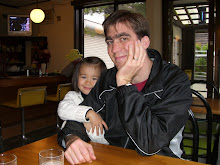
Here is a picture of him and his older sister playing "odaiko" last weekend:
2008-01-25
Taiko Babies


2007-09-14
A Bit more about Children's Taiko
I recently received a comment from a reader who enjoyed reading the “Children’s Taiko” entry, so I thought that I could write a bit more about it.
I can’t say that I’ve been in Japan long enough to make a judgment like this, but it seems that taiko has become more and more popular over the last 10 years or so, and I am becoming aware of new children’s taiko classes all the time. Of course this could also simply be that as I travel further along the taiko journey, I am just becoming exposed to more of these groups. In any case, children’s taiko classes are certainly prevalent in
So far, I haven’t come across any groups for children younger than 4 years old. From what I have seen, it is quite an accomplishment to get 4 year olds all playing the drum together. This week will only be our third week in the Asano class, but the teacher has not asked the children to play anything more than single notes so far. The notes are not even part of a rhythm; they are just working on having the correct stance and hand/arm motions. The other class, a neighborhood class, has also not moved beyond very basic rhythms, such as 4 quarter notes, or 4 quarters followed by 5 eighth notes. I am anxious to see what type of song they end up learning.
I have come across children’s groups, which are actually performing groups. Although the average age tends to be a bit older than 4 years old, the members do range in age from early elementary school through high school. One of these groups I saw at Exstasia this year. They were an all girl group from in Island somewhere in 
Part 1
Part 2
2007-09-10
Children's Taiko
My daughter is part of two children’s taiko groups. One is a neighborhood group; the other is a class at Asano Taiko for children. Although we are not part of these groups, (we are too old) watching the lessons can be very enlightening, particularly the Asano Taiko class. Here are two things I have learned from observing the lessons:
As many wise people have observed, we can learn a great deal from children.